
Why China Cannot Liberalize
Even if they wanted to...

Disclaimer:
I am an American patriot. I believe America is and should be the City on the Hill. I believe that all other countries are more-or-less deficient. I believe Chinese politics and society are relatively retarded in the technical and colloquial sense. I believe criticism of the US is THE highest form of patriotism.
Let’s Suppose that China wants to Liberalize...
...for the purposes of argument. I will publish a brief supplement to this at a later time that explores the basis for this supposition. For now, give me some rope and just assume it for the sake of argument.
I believe that even if China did want to liberalize, there are major perceived obstacles to that goal and that those perceived obstacles come, in large part, from the US. Despite our stated and positive desire that China should become a more free and open society, we are inadvertently creating strong disincentives around liberalization.
Briefly, What do I Mean by Liberalization?
Broadly, I mean the opening of society, politics, and the economy. Specifically I mean measures like relaxing press censorship, opening elections, and opening financial markets.
Canon Events
Every society has events that preoccupy its political discourse. In the US, we leverage 9/11, The New Deal, D-Day, the Holocaust, etc. as metaphors when discussing all types of policy. These canon events play an important role in how we talk about and understand political progress.

As a materialist, I feel obligated to point out that these canon stories are NOT the mechanism of progress. These stories can cause a society to row with or against the river, but the boat is going downstream eventually either way.
Chinese Canon Events
There are probably a lot. We have an awful lot in the US, and China has been around for an order of magnitude longer than the US so I bet they have more. That being said, there are two that I think are salient for our liberalization discussion
Losing Control of the Situation: 1989 Tiananmen Square Massacre
On June 3rd and 4th, 1989, somewhere between hundreds and thousands of people were killed in Beijing. (Estimates are always hard, I think that ~300 is most likely.)
Most of these people were pro-democracy protestors. Here are their stated aims:
Affirm Hu Yaobang’s (recently deceased pro-democracy politician) views on democracy and freedom as correct.
Admit that the campaigns against spiritual pollution and bourgeois liberalization had been wrong.
Publish information on the income of state leaders and their family members.
Allow privately run newspapers and stop press censorship.
Increase funding for education and raise intellectuals’ pay.
End restrictions on demonstrations in Beijing.
Provide objective coverage of students in official media.
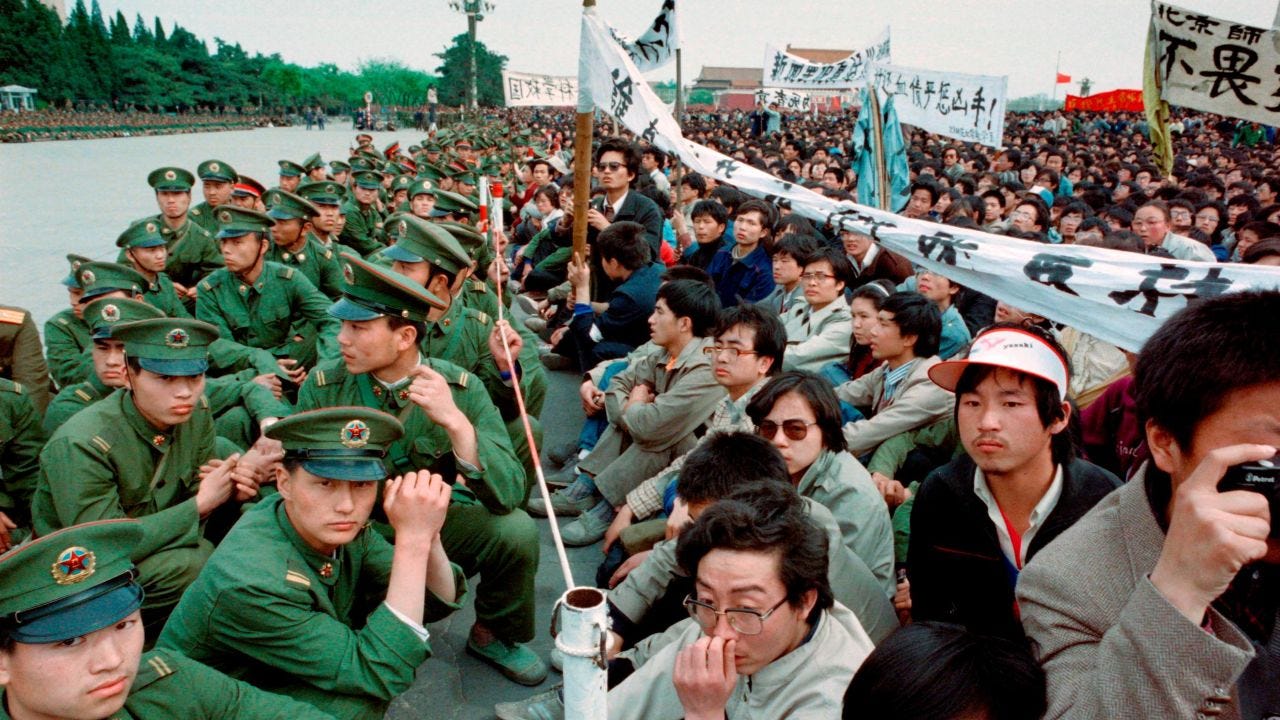
There are a couple of important points to be made about the May 35th incident.
The government lost control over the movement.
For the three years leading up to the massacre, the protesters enjoyed some support from within the government and the government tolerated the protests. Eventually, culminating with the protestor’s refusal to evacuate the square for Gorbachev’s state visit, and their attempt to break into a meeting between Deng and Gorbachev, Deng decided that the CCP had lost control of the situation and needed to declare martial law.The government did not understand civil society.
One of the early signs or causes of trouble was that the soldiers heading to Tiananmen were near-categorically blocked from proceeding by Beijing citizenry.
Neither the students in the square nor the high officials anticipated what happened next: the people of Beijing overwhelmed and completely stalled the 50,000 troops coming in from the north, east, south, and west, on six major and several minor routes. In his May 20 diary entry Li Peng simply noted: “We had not expected great resistance” and he then went on to record that troops everywhere had been stopped.
Deng Xiaoping by Ezra Vogel p. 619
The government learned that civil society can behave in unpredictable and powerful ways and really came to fear it.The CCP came to understand the crackdown as necessary.
Jiang Zemin, who had studied in the Soviet Union, later praised Deng for having moved boldly to keep China from falling apart as had the Soviet Union.
Deng Xiaoping by Ezra Vogel p. 626This understanding also seemed to percolate through society.
The Chinese students after June 4, then, unlike their counterparts in the Soviet Union and Eastern Europe, stopped attacking the Communist Party. Many students came to believe that progress could only be achieved by slowly building a base, by improving the economic livelihood of more people, by improving people’s understanding of public issues, and by gradually developing experience in democracy and freedom. Even some students who were not members of the Communist Party acknowledged that the leaders had been in danger of losing control over the country, and that only the party could maintain the stability necessary to promote economic growth. Many believed that despite the corrupt and self-serving officials, the Communist-led program that had brought about the reform and opening policies— and with them, the improved livelihood of the people— was preferable to any likely alternative.
Deng Xiaoping by Ezra Vogel p. 633
This brings us neatly to the other Chinese Canon Event:
Apocalypse Now: The Fall of the Soviet Union
Putin famously said that...
“The breakup of the Soviet Union was the greatest geopolitical tragedy of the 20th century.”
I don’t exactly agree with this and I doubt a Chinese person would either, but I do think there is a real sense in which it was a great geopolitical tragedy of the 21st century.
And in either case, it really was a tragedy, and beyond tragedy, I think it can be accurately described as an apocalypse. The best description of this event I have found is in the section “The Death of a Nation” in Klebnikov’s Godfather of the Kremlin. Klebnikov presents a litany of tragedy, discussing excess deaths, elderly Russians starving in the streets, and mass outbreaks of disease, etc. He claims that in ‘97, 9% of all Russian children were abandoned. And this is just on the social front, Russia also went through a political and economic götterdämmerung with Yeltsin, economic gangsterism, and sovereign debt crisis.
Go watch Lilya 4-ever and Plemya and then ask yourself how risk averse you would be to avoid those things happening to your children.
Because China was watching the whole time and they saw this political, social, and economic blow up and they attributed it, probably correctly, to the failure of Gorbachev to maintain state capacity.
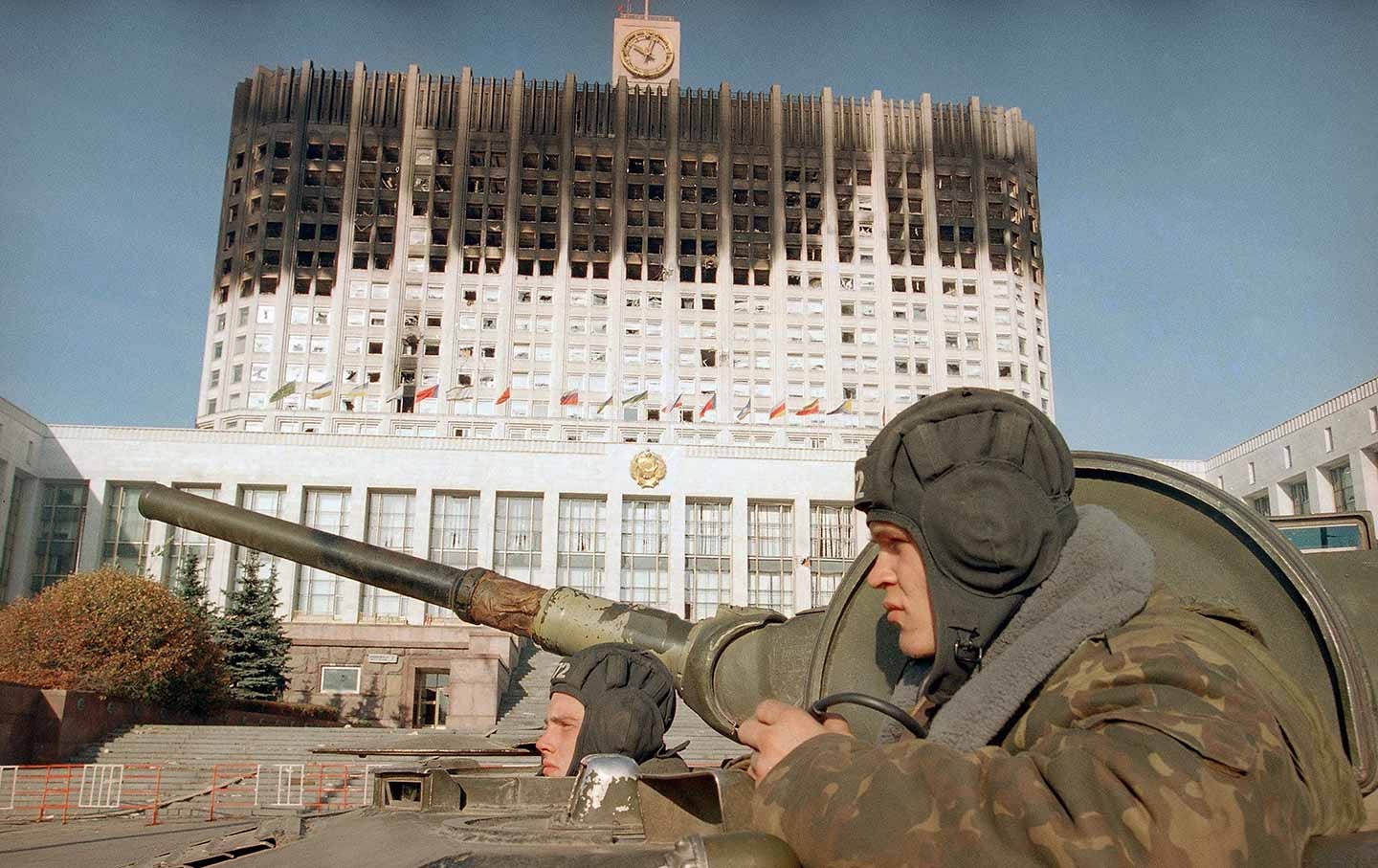
And the ride hasn’t stopped. In the more than 30 years since the fall of the Berlin wall, Russia has consistently shown itself to be a basket case and a warning. And that warning is directed at nobody more so than China.
Whatever trepidation existed about Tiananmen in the very early 90s was blown up and the Chinese became comfortable to the point of enthusiasm about a HIGHLY controlled transition to more open markets.
There is an extended story about all this that I subscribe to that comes (primarily) from a synthesis of: Collapse by Zubok, The Struggle to Save the Soviet Economy by Chris Miller, Lenin’s Tomb by Remnick, How China Escaped Shock Therapy by Weber. I did not include it here for the sake of brevity (lol). If you are interested, please let me know.
Canon Events: So What?
The big takeaway for the Chinese here is that liberalizing is fraught and difficult and creates vulnerabilities, perhaps catastrophic vulnerabilities that the Chinese likely see as becoming more acute...
Because the Chinese Think we Want to See them Fail
The problem with liberalizing is that the US is the ultimate Mother-in-Law of how to run your society. Nothing is ever good enough. Not only does the US have an extremely high functioning politics, society, and economy, but we developed all of these things as organically as possible and so we have no real conception that these things are a process.
Our modern politics are steeped in historical absolutism. We pass judgements on Ben Franklin for owning slaves at one point despite his eventual strident anti-slavery. Johns Hopkins gets the same treatment. And I actually think this line of criticism is fine and healthy internally but I think when we let it breach containment it ends up being counterproductive.
Think about Navalany (RIP) who had some support in the west but was also subject to perhaps decisive criticism over his willingness to work with fascists in Russia and his stated belief that Crimea should be Russian territory, etc. Navalny said these things and likely believed them because they were necessary to be even remotely palatable or viable in Russia. Navalny was a Russian politician, not an American politician. Whenever we, as a nation, look at foreign political progress, we tend to be confused as to why the guy (or girl (Venezuela)) coming into power isn’t the perfect combo of Ronald Reagan and Pete Buttigieg.
And if China did start to carry out this process, we would likely not be able to help ourselves from being highly critical and impatient. We would certainly not remember that it took us 249 years, a major constitutional crisis, a civil war, ethnic cleansing, internment/reeducation camps, etc. to get on the right track.
But you might argue that being critical does not amount to us wanting to see them fail. The issue is that the Chinese believe that it is very easy to lose control of the process of liberalization and essentially plummet the whole country off a cliff. That means they see impatience and pressure from the US as more than just an annoyance.
And furthermore, I think the Chinese perceive more-or-less acutely that we really do just straight up want them to fail.
A Perceived Program of Economic Warfare
The Chinese are suspicious (at least) that many recent US policy positions represent attempts to sabotage their economic growth.
Looking specifically at the CHIPS act and related efforts to block China from acquiring high level semiconductor technology, the US argument is that semiconductors (and AI) are military (dual use) technology. This argument is technically valid but a bit absurd. Semiconductors are up there with oil and steel as one of the most important commodities in the world. Blocking them looks like a veiled attempt to directly attack the Chinese economy and regardless of intent, it literally is that. America is betting BIG that AI will fundamentally transform the world for the better and we are at the same time, doing our darndest to make sure the Chinese have as hard a time as possible making advances in the field of AI. This is a bad look, even if you can write a watertight WSJ oped about it, or whatever.
A similar situation exists with Huawei, a company that is globally competitive and would be far more so if the US had not banned their networks and leaned on allies to do the same. The US claims, without solid evidence, but not illogically, that Huawei networks could be used for spying, but the Chinese see this as an excuse to attack China economically.
Here’s China in their own words:
“In violation of the principle of fair competition and market economy and international trading rules, the US seeks to hamstring competitive Chinese hi-tech companies under all kinds of trumped-up charges. To date, it has placed over 1,000 Chinese companies on various sanctions lists, subjected biotechnology and artificial intelligence technologies to enhanced export controls and stringent investment review, and sought to ban Chinese social media platforms including TikTok and WeChat.”
It is also probably somewhat irksome to the Chinese that the US does this type of spying all the time, including tapping Merkel’s phone and basically gets away with it scot free. (We get away with it because we do it and then we tell on ourselves and get mad at ourselves about it, which people find charming, ig.)
The takeaway from all this is that China believes that the US is both highly critical of, and covertly hostile to, China, not just as an authoritarian regime, but as an economic rival.
Let’s Take a Closer Look...
At the specific types of liberalization and why might feel particularly vulnerable to external attack in these areas.
Economic (Specifically Financial Sector) Liberalization
The US has the most sophisticated financial sector in the world. This high level of sophistication, combined with the USD’s role as the global reserve currency give us the ability to attack a vulnerable financial system. China is heavily dependent on monetary policy to maintain their economy and so a loosening of this control would put them in a vulnerable spot.
As a case study, consider the recent US Treasury support for the Argentine Peso. Ahead of Argentine midterm elections, opponents of Milei incited attacks on the Peso in an attempt to swing election results. This gambit could have worked and substantially undermined Milei (and the Argentine economy). Instead, the US backed the Peso with 40 Big Bands, the shorts got wrecked, Milei did fine in the elections and overall, everyone but the Peronists were better off.
Now imagine if instead of the US helping the Argentine government avoid a massive economic crash, we stood by or even encouraged the short positions. The US has massive clout in this area.
What’s cool here is that we don’t have to imagine!
In August 2015, China made a small step towards financial liberalization by kinda unpegging the RMB from the USD.
Western investors rushed to short the RMB. Western ratings agencies commented critically on the move. China also saw a jump in capital flight (they hate that). US lawmakers were also incensed about the move since this liberalization was a de facto weakening of the RMB (we hate that).
But... “Understanding the market fundamentals clarifies that the small devaluation by the PBOC was a necessary adjustment rather than a beggar-thy-neighbor manipulation of the exchange rate. While many American politicians grumbled, China was doing what the U.S. has prodded it to do for years: allow the market to determine the yuan’s value.”
I highly recommend the Investopedia article on this event.
Clarification: Many of you probably already know this but Renminbi (RMB) is like United States Dollar (USD) and Yuan is like “Dollar” or “Buck”. They’re usually interchangeable but have minor semantic differences.
All in all, Beijing came away from this very minor attempt at liberalization with a bloody nose, and there is nothing to say that they won’t have an injury-and-insult type experience with the next attempt.
Social Liberalization
I think Richard Dawkins’ concept of memetics is really very important. A signal discovery. Ideas really are like viruses.
The average American lives in a memetic pigsty. We are constantly exposed to highly tailored memetic-kill-viruses all the time through every sensory orifice. We jostle each other at the content trough all day long and we have done so for pretty much 200 years. The slop only getting more virulent with each new IT revolution.
As a result we have VERY hardened memetic immune systems.
You can kind of see this in action when you look at what happens to Boomers exposed to new attack vectors. I would argue that Zillenials are probably essentially immune to cable news slop, but we still get got by Reels or whatever because we haven’t developed those antibodies yet. Boomers get double triple owned by eg facebook and instagram.
China has none of this, they definitely still have nasty no good slop on social media, but the government really works hard to suppress it and NONE of it is political. I really like this guy’s videos where he looks at Chinese social media dysfunction but that stuff is the common cold compared to the Nuclear Bubonic Plague tier stuff we snack on in the good old USA.
Remember when TikTok got banned for a couple hours and everyone switched over to rednote which is like a Chinese equivalent? There was a line of discourse that said that US users weren’t ready for Chinese social media and they would get “one-shotted” by superior Chinese memetics. Dumb, idiotic.

All this to say that as China opens its society to free speech, it is vulnerable to some kind of memetic virus. I don’t think the CIA or whoever could actually make a lethal meme, I do think someone somewhere could. China doesn’t just have to worry about us, they have to worry about India, Russia, and all their other sworn enemies and close friends.
But honestly, I think what’s more likely is that the lethal meme just happens and I think this because it already has.
The Falun Gong movement grew very rapidly in China in the early 90s. At first it was encouraged by the CCP since the movement mostly emphasized having good morals and being healthy, but as it gained followers through the 90s it came into conflict with the state and was eventually aggressively suppressed. This suppression is also sort of a Canon Event for the CCP. Falun Gong escaped to the US where it has become a thorn in the CCPs side. The CCP got a LOT of (well deserved) backlash over organ harvesting of Falun Gong practitioners, the US branch of Falun Gong continues to militate against the CCP, and it has generally been a sore spot that the west has played a part in.
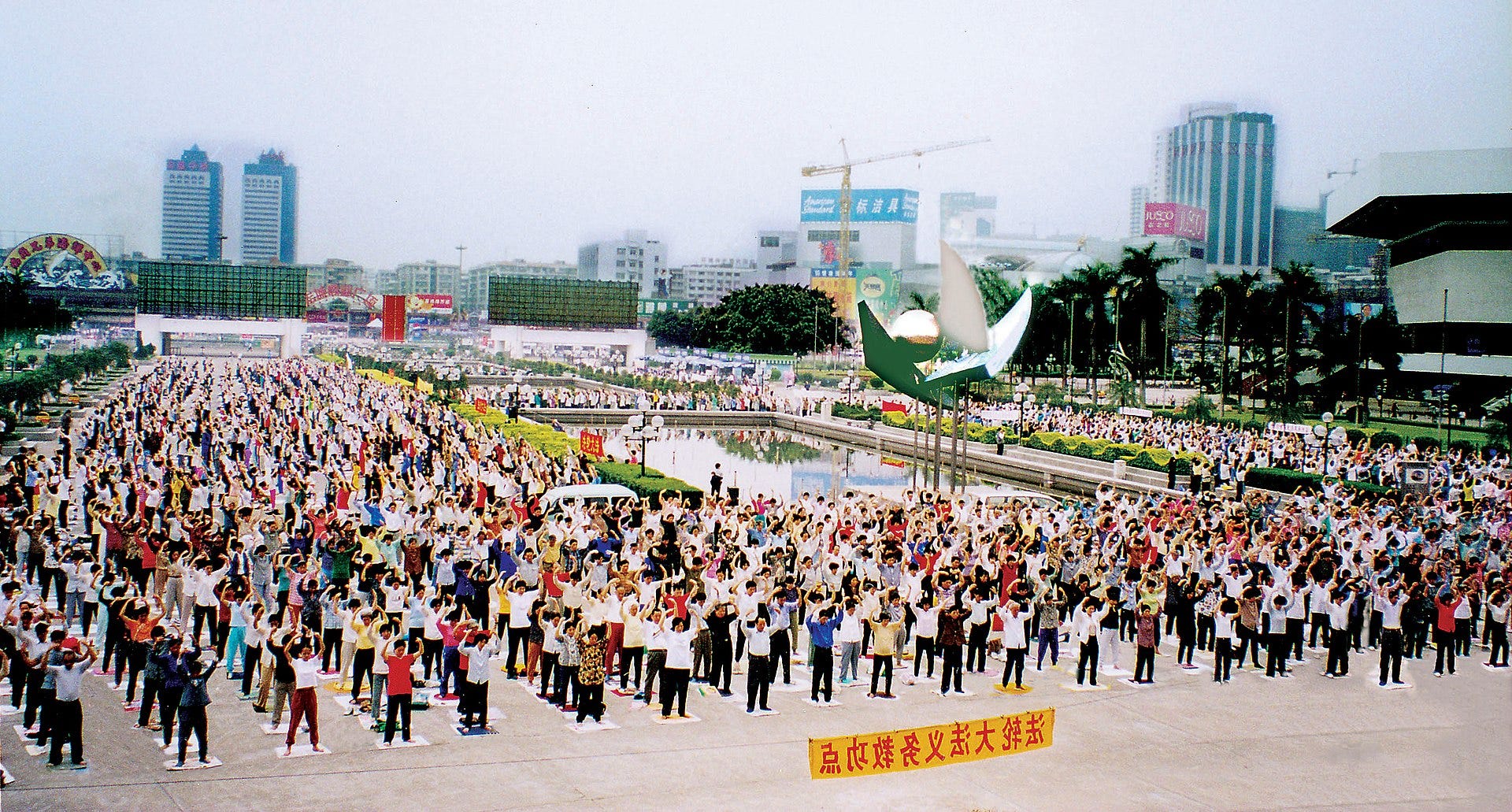
And again, I want to emphasize that China has experienced a pretty big issue with social opening that didn’t even have anything to do with politics. I think something like QAnon would probably blow up dramatically.
In fact, I think there were probably a bunch of CCP working groups on QAnon where a bunch of party members sat around and tried to figure it out and basically came to the conclusion that that’s just what happens when you let people post whatever they want on facebook and that the CCP better be careful.
Political Liberalization
Of the three, I think this is the one that the Chinese are least interested in. Not only have they really gotten beat up by this in the past, but consider this: A majority of people in the US don’t seem to really understand, appreciate, or put energy towards safeguarding the boring, counterintuitive, frustrating institutions of democracy. Every single day we enjoy the liberty and prosperity that our system tends towards and we still kinda just don’t care and in fact are often fairly critical of democracy. The Chinese are likely even less able to appreciate why political liberalism is so powerful, especially since they just spent 3 decades getting big paper under a brutal authoritarian government that censors the press and murders religious minorities to impress Swiss doctors. Also, I believe very strongly that political pluralism is an emergent phenomenon that trails economic progress but that is out of scope.
All that being said, we are doing a thought experiment here, as told so lets get back to that.
Let’s say that China wanted to start opening up its political processes. Well, they would probably first have to open up their society (free and open elections are meaningless without a free press) and we have already talked about those issues.
Even if they somehow figure out a free press and social media (or we just suppose that problem away since we’re doing thought experiments), there are still some major issues with Chinese political liberalization.
The US interferes with elections all the time. Sometimes this is actually not a huge issue. I think that the Treasury support for the Argentine Peso could be read as election “interference” and I am pretty much fine with that because it genuinely does tend towards stability.
But the US also has a pretty robust election interference complex in the form of the State Department/DoD/CIA that carries on some pretty questionable and often destructive/counterproductive antics.
Some of this stuff is well known and obscene. Coups in South and Central America, Nation “building” in the Middle East, etc.
But some of it is a bit more subtle. China is probably not worried about an Iraq ‘03 scenario, but the State Dept. does a lot of “democracy building” via nominally independent but closely controlled NGOs. This is a bit of a looney left talking point, but it’s essentially true and all the more true in this case because China perceives it to be true.
China gets really preoccupied about “color revolutions” and the most salient case here is the very recent Chinese reacquisition of Hong Kong.
Here is China in their own words, note that NED is funded by and essentially an arm of the US Congress.
Funded and incited by the National Endowment for Democracy (NED) and other US government’s “white gloves”, anti-China rioters in Hong Kong committed vandalizing, looting and arson in the name of the so-called fight for “democracy” and “freedom”, and violently stormed the building of the Legislative Council (LegCo) of Hong Kong. NED even appeared publicly on the street to direct relevant activities, attempting to stage a “color revolution” in Hong Kong.
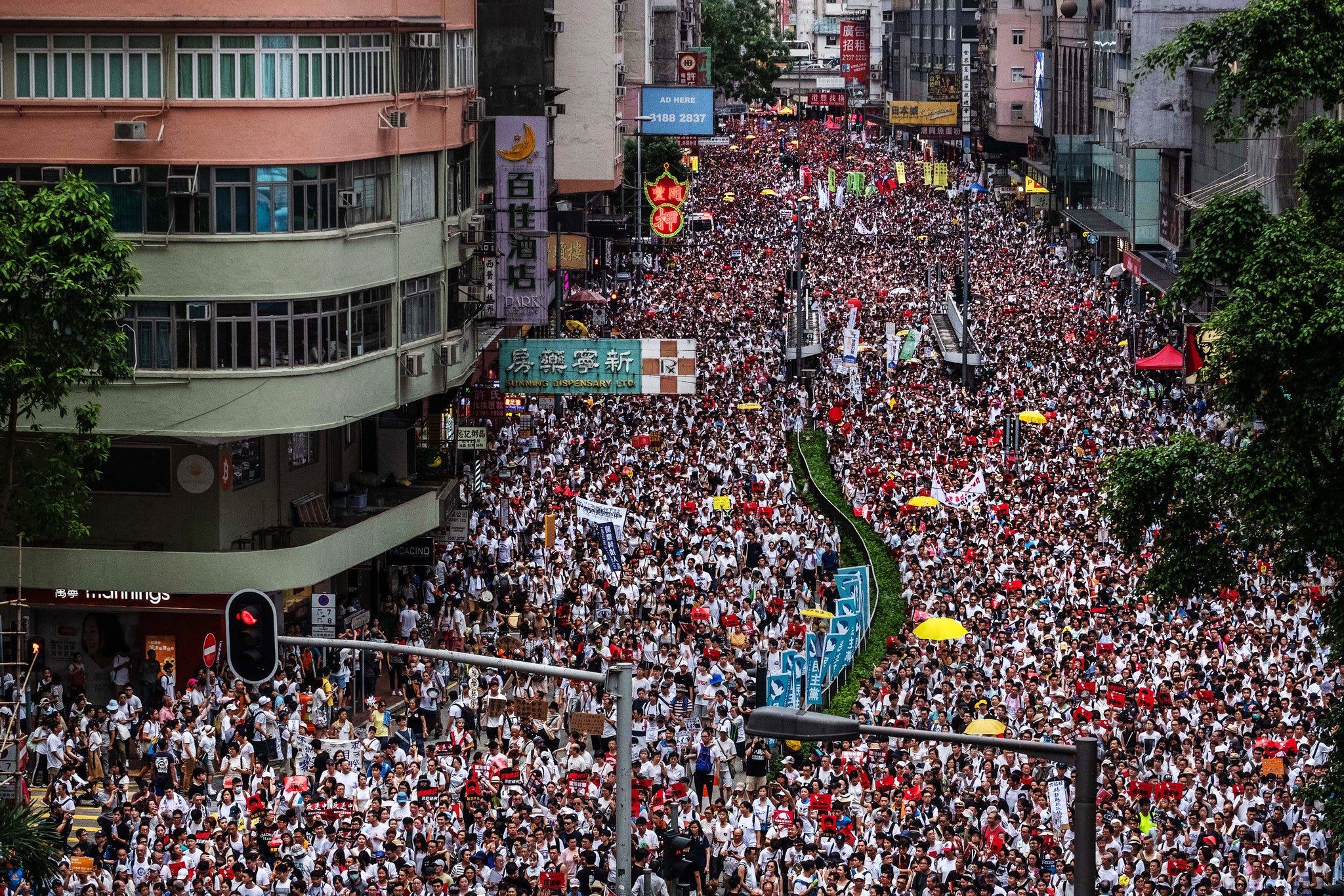
You might point out that China’s reintegration of HK was a moment of political tightening rather than a moment of political opening, but I think a better way of characterizing it would be as a moment of political weakness. China believes (right or wrong) that the West sees weakness as an opportunity for interference. So China seeks to minimize weakness by avoiding political progress and the turbulence it naturally creates.
Put on your thinking cap. Do you think that if China piloted free and open elections, there would not be a lot of good ideas floating around in D.C. about how to steer those elections towards pro-US candidates? And you might not see a problem with this, but I do, and not because I am anti-US. On the one hand, even the hint of interference fundamentally debases the concept of free elections. On the other hand, as I pointed out with Navalny, I would rather have China run by earnestly pro-China politicians, Russia run by earnestly pro-Russia politicians, and the US run by earnestly pro-US politicians. There is a pun on “Manchurian Candidate” in here somewhere.
So What to Do?
That China should become a more free and open society is basically obvious and well within the Overton window. Concrete measures to make this possible are not.
What should the US do? I have some more-or-less concrete proposals here.
Clean up our own house.
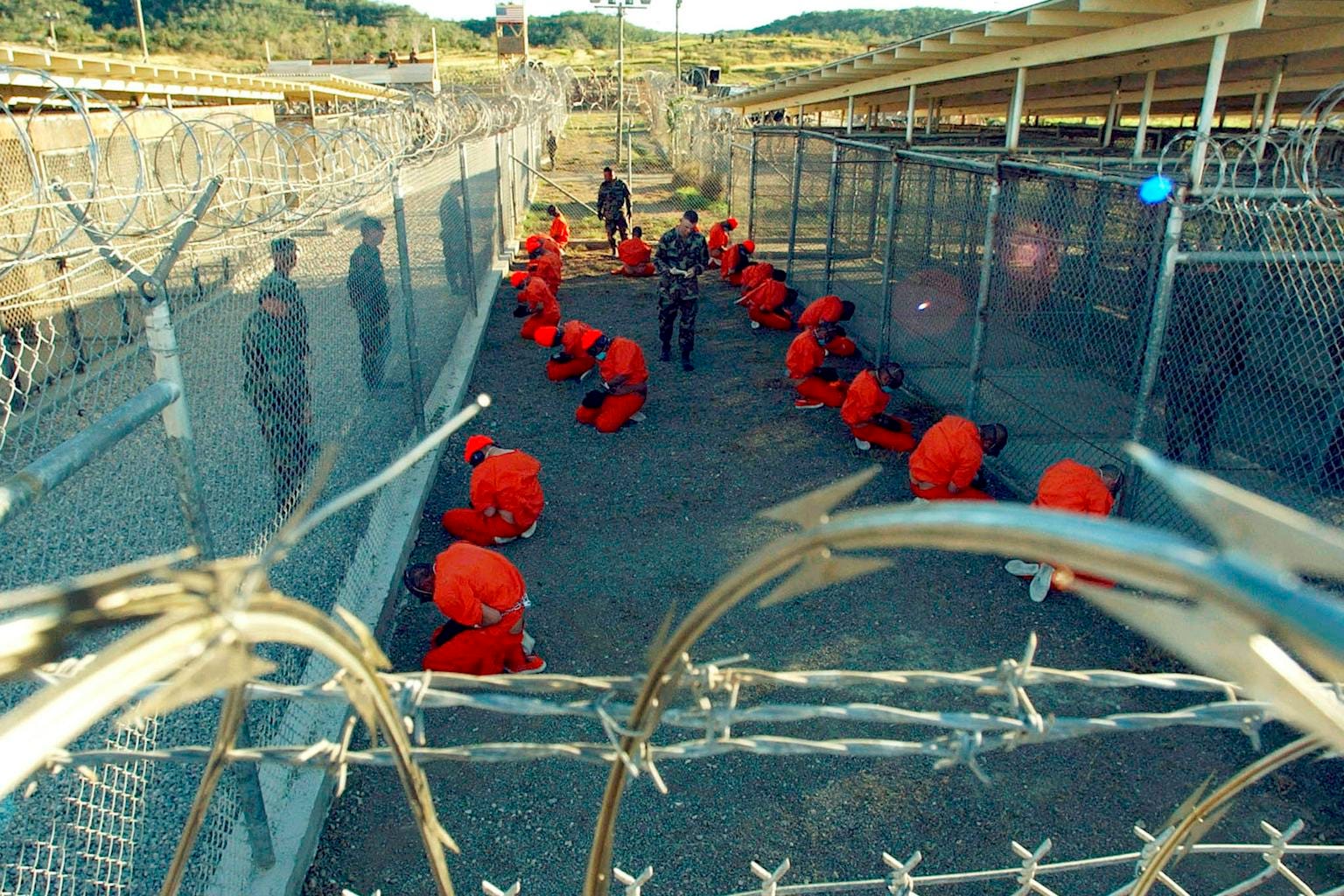
It’s a little absurd to me that many of the politicians who so love to use Xinjiang as a cudgel are the same ones that defend the existence of Guantanamo Bay prison. The hard thing about being a leader isn’t avoiding hypocrisy. That actually tends to be pretty easy, isomorphisms being uncommon irl. The hard thing is avoiding the perception of hypocrisy. This often involves substantial inconvenience and sacrifice. I wouldn’t really call closing gitmo a “sacrifice” though.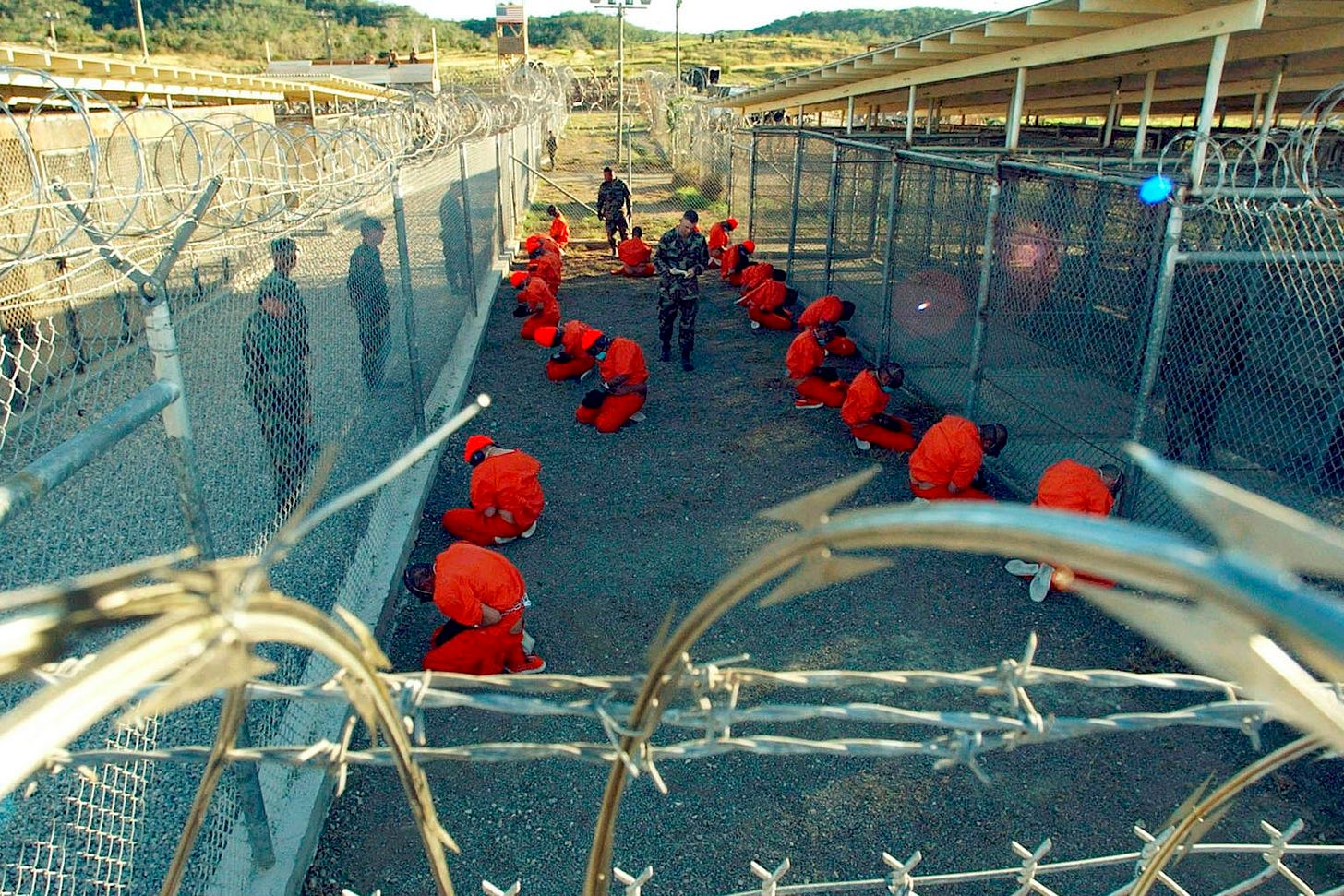
We gotta get rid of the sanctions and trade war stuff
I really wish more people were TRUE chauvinists like me because the idea that another country, especially one with dysfunctional politics, could ever come close to touching us is just silly. And so the idea of trying to keep China down strikes me as needlessly cruel. It is expressly in the US interest for China to get rich and, related, it is extremely not in the US interest for China to become poor.
I broadly oppose economic sanctions as a tool because I think trying to get a country to progress politically by making them poor is like trying to make someone smarter by hitting them in the head with a hammer.Start talking about Sovereignty.
The concept of the US respecting Sovereignty is genuinely very difficult to imagine. We have no muscle memory on this. China cares very much about sovereignty as does pretty much every other country in the world. Rather than making it eminently clear that we would pursue violent regime change in China if we ever got even a little chance, we should become staunch arbitrary defenders of sovereignty.
This starts with things like not carrying out illegal strikes on foreign countries (we love doing this), but the productive endpoint would be to actually extend unilateral sovereignty guarantees to China. This would sound something like “The territorial integrity and sovereignty of China will be upheld by the US.” The precise language of this is less important than the demonstrated sentiment. Recall that China also has to worry about Russia, India, etc.
I really sort of can’t emphasize this sovereignty thing enough since I feel that fears of loss of sovereignty motivate most anti-democratic energy in the world and that the US could really change the world for the better by arbitrarily upholding sovereignty as the fundamental legal principle of IR.Engage in multilateral organizations with humility and good faith.
Wrote a whole post about this. I’ll summarize.
When the US acts unilaterally, the results are categorically bad for us and the world (Iraq war being the quintessential example). The US should accept multilateral decision-making processes when making external decisions, even if we don’t like the results of the process because multilateral decisions will be better than unilateral decisions.
Wrap up
China saw that grassroots political movements can get out of hand quickly and blow up big with Tiananmen. They want to avoid another situation where they lose control.
China watched the massive ship of the USSR slip into apocalyptic poverty and chaos due to a sloppy economic and sociopolitical transition. Messing up liberalization is an EXISTENTIAL THREAT to China, not just the CCP.
China has seen the US interfere in foreign politics for 100+ years and expect it to happen to them.
China perceives that the US is hostile to their system of government, but also that the US is hostile to China as a rising economic power.
When China liberalizes financially, the US can attack via domestic financial firms, ratings agencies, and USD dominance.
When China liberalizes socially, they are vulnerable to powerful memetic viruses that their population lacks immunity to.
When China liberalizes politically, the US can attack via NGOs, and our superior experience with electoral politics.
In order to allow China space to pursue the difficult process of liberalization, the US must dramatically shift its stance vis China.
I appreciate you taking the time to read this article and I always appreciate everyone’s thoughtful comments!
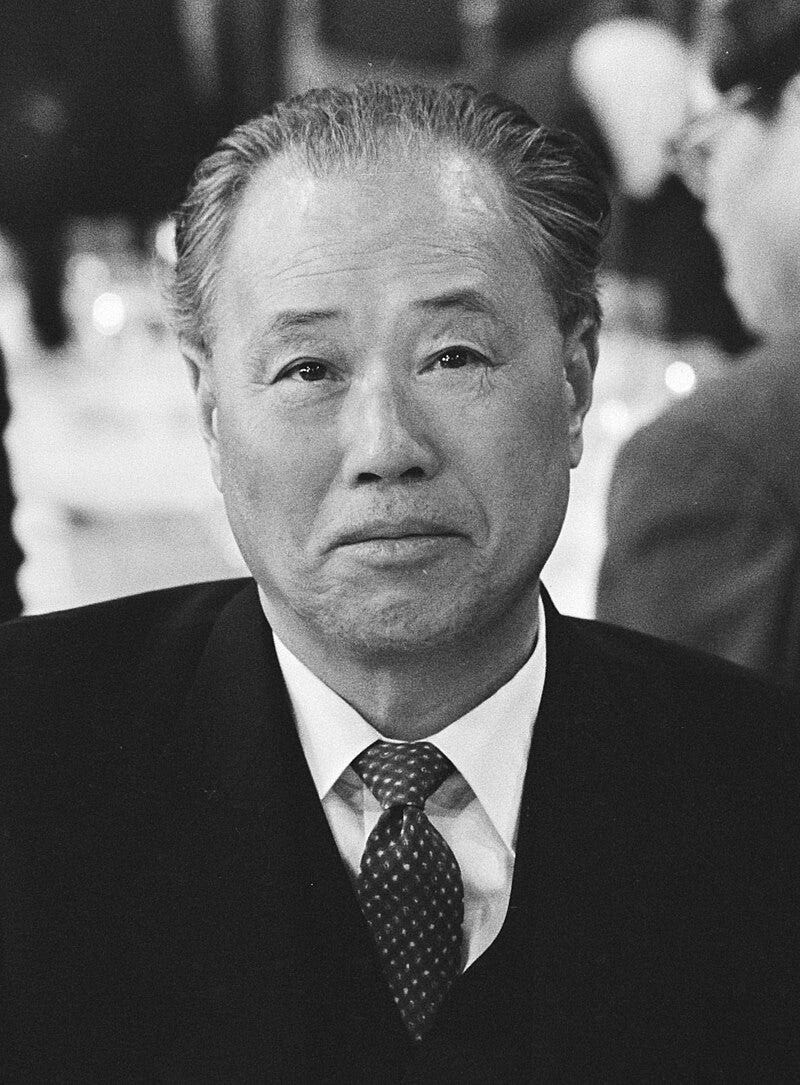
I want to take a moment to remember Zhao Ziyang, a tragically little-known figure. He was 2nd in command of China leading up to Tiananmen and was Deng’s likely successor. He was a supporter of democracy and ultimately gave up his position in protest of Deng’s decision to declare martial law. He was stripped of his title, arrested, persecuted, and died under house arrest in ‘05.
I wonder if China could liberalize in its own way, rather than roughly following the western model like Japan et al did.
For example, China might experiment with limited democracy, with different forms being tried in different provinces. One might limit suffrage to net taxpayers, for example.
Another idea might be to ease up on religion but instantly strip it of tax free status the instant a group says or does something remotely political.
I think the relative success of the west has wrongly convinced us that ours is the only way. There might be others.
However, this approach would require curiosity, daring and high social capital. I'm not sure China has enough of those.